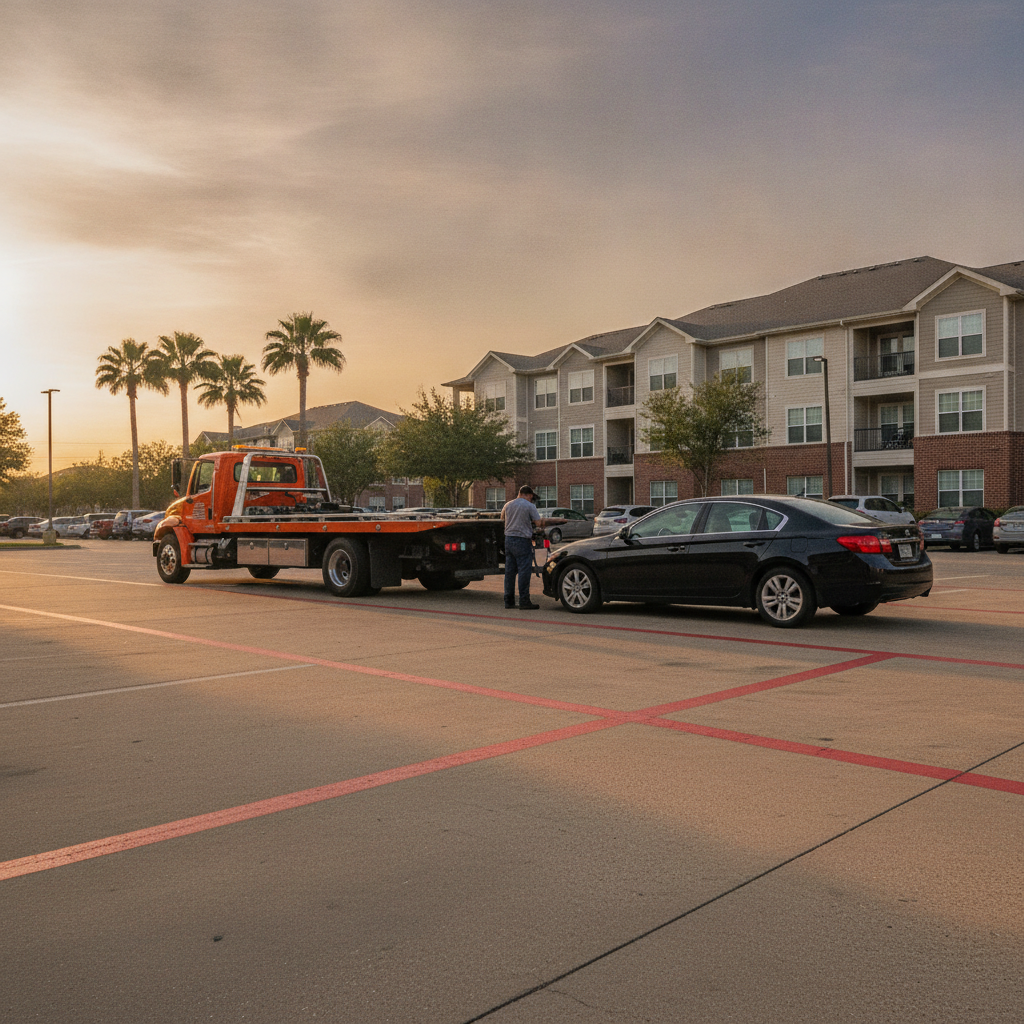
How Do Houston Towing Companies Legally Handle Vehicles Blocking Fire Lanes on Private Property?
If a vehicle is blocking a fire lane on your private property in Houston, Texas law does authorize towing — but only when the property meets specific signage and authorization requirements under Texas Occupations Code Chapter 2308. This is not a situation where you can simply call any tow truck and wave them in. The statute draws a clear line between a tow that is legally defensible and one that exposes you as a property owner to a wrongful towing claim. Understanding exactly where that line falls is the difference between protecting your property and creating a liability you did not anticipate.
Why Fire Lane Towing Is Different From Standard Unauthorized Parking Enforcement
Most unauthorized parking violations require documented written authorization from the property owner or their designated agent before a tow truck can hook up to a vehicle. Fire lane blockages are treated with more urgency under the law — but that does not mean authorization requirements disappear entirely.
Under Texas Occupations Code §2308.255, a towing company generally must have written authorization from the property owner or a person in charge of the property before towing a vehicle. However, §2308.255(b) identifies specific circumstances where consent can be given in a manner other than a written document — fire lane obstruction is one of the scenarios where law enforcement and local fire codes intersect with the towing statute to create a clearer path for immediate removal.
The practical reality: if your fire lanes are properly marked and your towing authorization agreement is already in place with a licensed towing company, a vehicle blocking that lane can be removed without you having to be physically on-site to sign off each time. That is exactly why a standing towing authorization agreement matters — and why the quality of your signage determines whether a tow is legally sound or legally challenged.
Signage Requirements That Make or Break a Fire Lane Tow
The sign is not just a deterrent. Under Texas Occupations Code §2308.301 and §2308.302, signage must meet specific content and placement standards for a private property tow to be legally defensible. For fire lanes specifically, this means:
- Signs must be clearly visible at the entrance of the fire lane and at intervals along its length
- Each sign must state that unauthorized vehicles will be towed at the owner’s expense
- Signs must include the name and phone number of the towing company authorized to tow from that location
- Fire lane curbing should be painted red in accordance with local fire code — this is not a Chapter 2308 requirement, but it reinforces enforcement and deters legal challenges
- Signs must meet the size, font, and color standards prescribed under the Texas Department of Licensing and Regulation (TDLR) towing rules
If your fire lane signs are faded, missing the towing company contact information, or posted at heights or angles that make them difficult to read, you have a problem. A vehicle owner who claims they could not see a compliant sign has a stronger basis to dispute the tow — and the property owner, not the towing company, typically absorbs that liability exposure.
This is a gap that most competitor towing companies in the Houston area gloss over entirely. They will tow the vehicle and hand you the paperwork, but they rarely walk you through a sign compliance review before you ever need to enforce. At MC Towing’s parking enforcement and property solutions, a signage compliance review is part of how we set up every enforcement relationship — because a tow that gets reversed in a dispute is a problem for everyone involved.
What Property Managers in Harris County and Fort Bend County Need to Know About Ongoing Authorization
Across Harris County — from dense apartment corridors in northwest Houston and Pasadena to newer commercial developments in Sugar Land and Katy — property managers frequently ask whether they need to call and authorize every individual fire lane tow. The answer depends on how your towing authorization contract is structured.
A properly drafted towing services agreement with a TDLR-licensed operator gives the towing company standing authority to remove vehicles from designated fire lanes without requiring you to be on-site for each enforcement action. This is sometimes called a blanket or standing authorization, and it is entirely lawful under Chapter 2308 when documented correctly.
However, that standing authorization must be in writing, it must identify the specific property, and it must be held on file by the towing company. Verbal agreements do not satisfy the statute. If a towing company is willing to tow from your property on a handshake, that is a red flag — because when the vehicle owner files a complaint with TDLR or pursues a wrongful tow claim in small claims court, the absence of written authorization becomes your problem too.
For apartment communities in particular, §2308.253 imposes additional restrictions on certain towing practices — including rules around notification and the hours during which tows can be initiated. Managers at large complexes in Cypress, Pearland, or along the FM 1960 corridor should make sure their towing partner is familiar with these limits even when enforcing fire lanes, where the urgency may feel like it overrides the rules. It does not.
The Role of Houston Fire Code and How It Intersects With Chapter 2308
The City of Houston Fire Code, enforced by the Houston Fire Department, requires fire lanes to remain clear at all times for emergency vehicle access. Blocking a designated fire lane is a Class C misdemeanor under local ordinance. But the fire code enforcement mechanism — ticketing by HFD or code enforcement — is separate from the private property towing mechanism under Chapter 2308.
As a property owner, you do not need to wait for law enforcement to ticket a vehicle before authorizing its removal from a fire lane. Your standing towing authorization agreement, combined with compliant signage, is sufficient legal basis for removal. However, some property managers in Pasadena and the Beltway 8 corridor mistakenly believe they need a police report or fire marshal presence before calling a tow. That delays enforcement, creates safety risk, and is not required by Texas law.
What is required: documentation. Your towing company must complete a tow ticket for every vehicle removed, including the date, time, vehicle description, reason for tow, and the name of the person who authorized it. That record is your protection if the vehicle owner disputes the tow. Any operator who does not provide a copy of that documentation to you has left a gap in your audit trail.
Protecting Yourself From Wrongful Tow Claims After a Fire Lane Enforcement
A vehicle owner who believes their car was wrongfully towed from a fire lane has the right to request a hearing under Texas Occupations Code §2308.456. The hearing examines whether the tow complied with Chapter 2308 — including signage standards, authorization documentation, and proper notification to the vehicle storage facility.
As the property owner, you are not a party to the towing contract, but your compliance failures — bad signage, no written authorization on file — can result in the towing fees being waived and the towing company facing TDLR sanctions. That outcome creates friction in your enforcement relationship and can make it harder to maintain consistent fire lane clearing going forward.
The simplest protection is a documented, ongoing enforcement relationship with a licensed towing company that conducts a property compliance review before enforcement begins. If your current towing operator has never walked your property, reviewed your signage, or given you a written authorization agreement to sign, you are running enforcement on an informal basis that may not hold up when it matters.
Explore the full scope of private property towing services available to Houston-area property managers, including fire lane enforcement and written authorization setup.
Frequently Asked Questions: Fire Lane Towing on Private Property in Houston
Can I tow a vehicle from a fire lane on my private property without calling the police first?
Yes. Under Texas Occupations Code Chapter 2308, you do not need police involvement to tow a vehicle from a properly marked fire lane on private property, provided you have a standing written authorization agreement with a TDLR-licensed towing company and your signage meets statutory requirements. Police involvement is not required and does not need to precede the tow.
What happens if my fire lane signs don’t meet TDLR standards and a vehicle is towed anyway?
If the vehicle owner requests a hearing under §2308.456 and the hearing examiner finds the signs were non-compliant, the towing and storage fees may be ordered refunded. Your towing company could also face TDLR sanctions. Non-compliant signage is one of the most common reasons fire lane tows are successfully disputed — a compliance review before enforcement begins is the right approach.
Does my apartment complex in Cypress or Katy need a separate towing agreement for fire lanes versus regular parking spots?
Not necessarily — a properly drafted towing services agreement can cover all designated enforcement zones on your property, including fire lanes, reserved spots, and visitor areas. The key is that the agreement specifically identifies the property and the authorized enforcement zones. Vague or informal agreements create gaps. Your towing partner should be able to provide you with a written contract that covers each zone clearly.
Can a resident claim their vehicle was wrongfully towed from a fire lane if they say they were only there for a few minutes?
Texas law does not establish a minimum time threshold for fire lane blockages. If a vehicle is in a properly marked fire lane and your towing authorization is in place, the tow is authorized regardless of how long the vehicle was parked. The vehicle owner may still file a complaint, but duration alone is not a valid legal basis for a wrongful tow claim under Chapter 2308.
How do I know if my towing company is actually TDLR-licensed?
You can verify a towing company’s license status directly through the Texas Department of Licensing and Regulation’s online license search. Any company operating tow trucks in Texas without a valid TDLR license is doing so illegally — and tows conducted by unlicensed operators expose your property to significantly greater legal risk. Always verify before you sign an enforcement agreement.
Ready to Get Your Fire Lane Enforcement Compliant?
If you manage an apartment community, HOA-governed property, commercial parking lot, or office complex in Houston, Harris County, Fort Bend County, or the surrounding area, fire lane compliance is not optional — and the cost of getting it wrong is higher than the cost of getting it right from the start. MC Towing Inc works with property managers across the greater Houston metro to establish documented, TDLR-compliant enforcement programs that hold up when challenged.
Contact us today for a free property consultation. We will review your current signage, assess your authorization documentation, and help you put a fire lane enforcement program in place that protects your property and your residents — not one that creates liability the first time someone disputes a tow. Reach out to MC Towing Inc to schedule your free review.