How Do Houston Fitness Centers and Gym Property Managers Legally Enforce Parking and Towing for Non-Member Vehicles?
If you manage a fitness center or gym in Houston, you already know what happens at 5:30 PM on a weekday: your lot fills up fast, and not every vehicle in it belongs to a paying member. Non-members running errands at the adjacent strip center, commuters ducking under Beltway 8 or the I-10 corridor to grab a free parking spot, and delivery drivers parked in your fire lane are all common problems. The question is how to enforce your lot legally without exposing yourself or your property ownership to liability. Texas Occupations Code Chapter 2308 governs every step of that process — and getting even one element wrong can invalidate the tow and leave you holding the dispute.
Why Fitness Center Parking Enforcement Is a Distinct Challenge
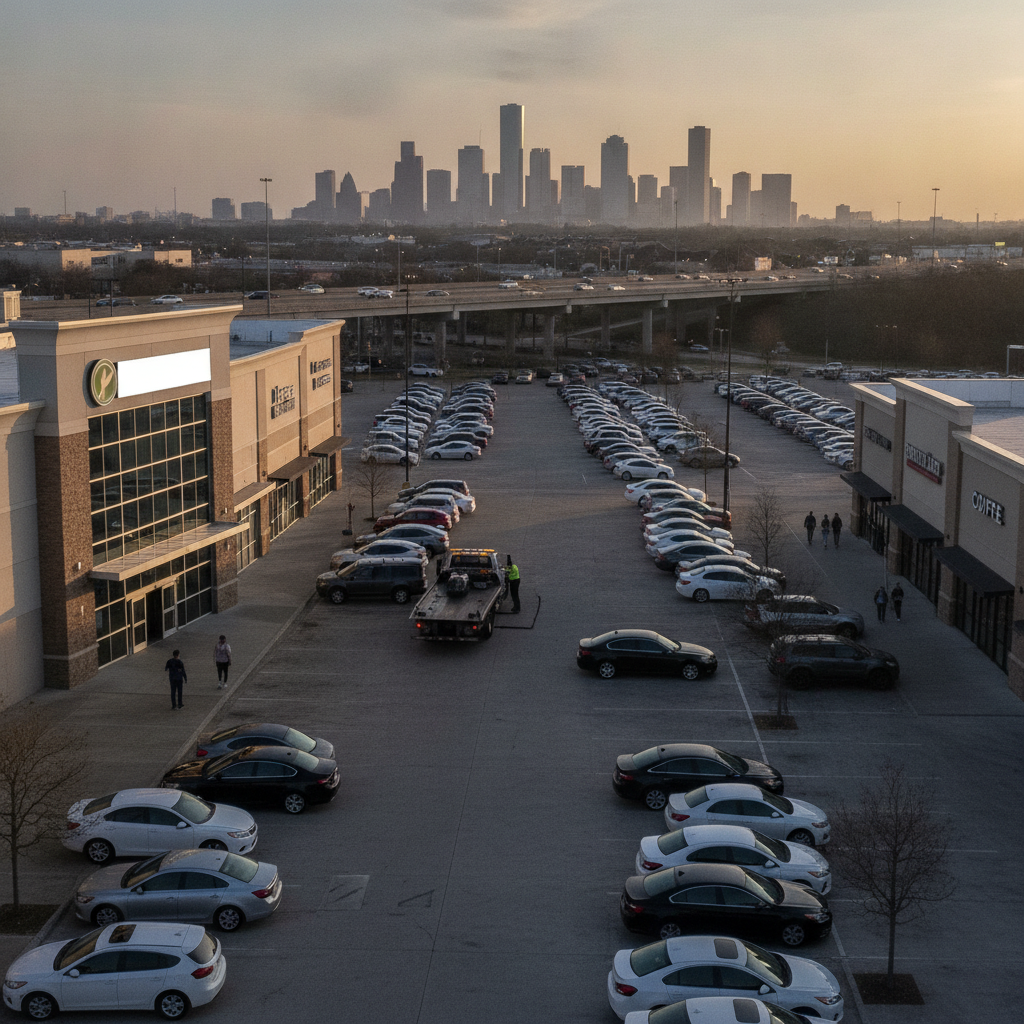
Most towing guides treat commercial parking enforcement as a one-size-fits-all scenario. Gyms are different. Your parking demand is highly cyclical — early morning, lunch hour, and post-work rushes create three daily peak windows where lot abuse compounds. Fitness centers located in multi-tenant developments near high-traffic corridors like FM 1960, Highway 290, or I-45 North face an additional layer of complexity: shared ingress, overlapping customer traffic, and unclear lot boundaries that can make it difficult to determine at a glance whether a vehicle belongs to your tenant mix or is a pure non-customer.
In growing suburban markets like Katy, Cypress, and Spring, where new fitness concepts are opening alongside new retail pads, this issue is even more pronounced. A standalone gym with 120 parking spaces and a neighboring quick-serve restaurant can lose 20 to 30 spaces within minutes of a lunch rush — permanently blocking member access and creating real safety and fire lane compliance risks.
Enforcing that lot without a legally compliant towing program is not just ineffective — it’s a liability problem.
What Texas Law Requires Before Any Vehicle Can Be Towed From Your Gym Lot
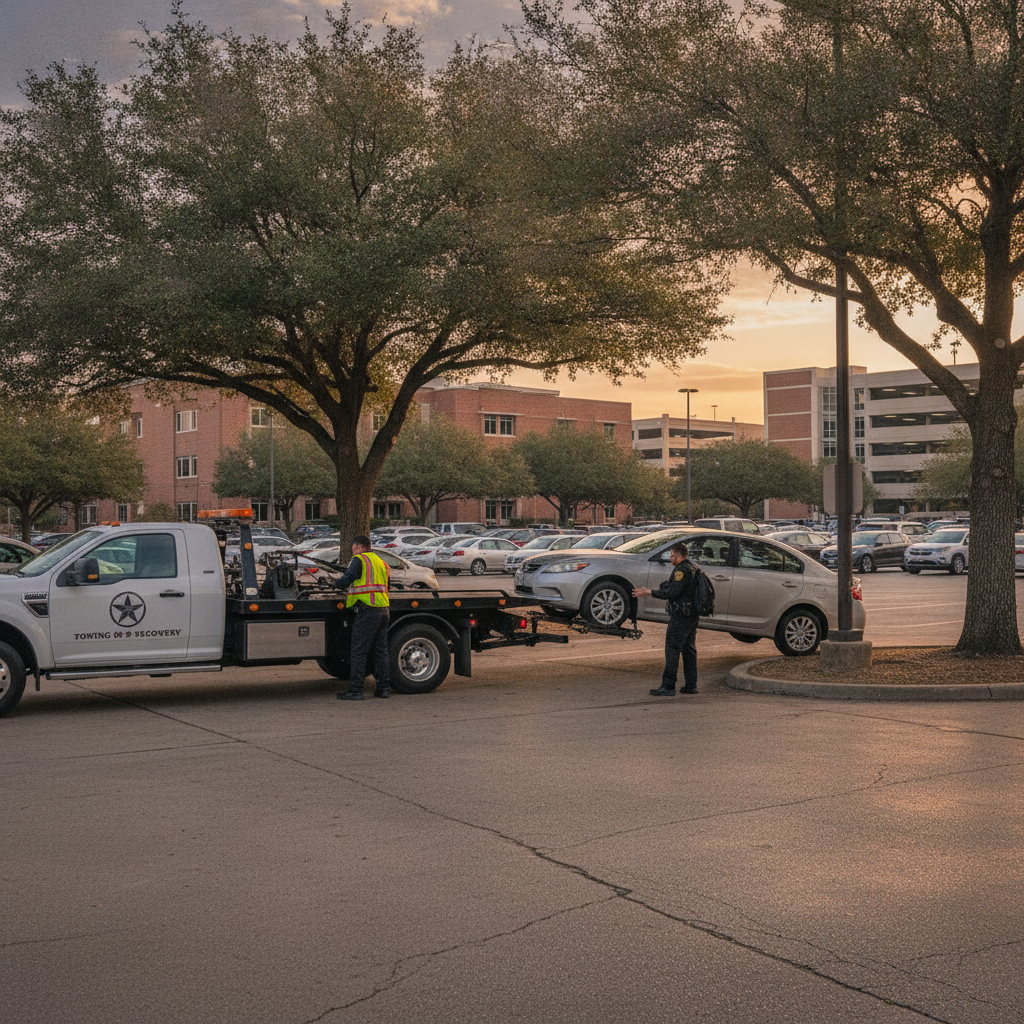
Under Texas Occupations Code §2308.255, a towing company cannot remove a vehicle from your private property without written authorization from the property owner or a person whom the owner has authorized in writing to consent to the tow. For fitness centers, that authorization structure needs to be thoughtfully documented — especially if your facility manager or operations staff are the ones making the call on-site rather than a property ownership entity.
The authorization document must identify who can approve a tow, under what circumstances, and must be signed before enforcement begins — not after a dispute arises. If you are operating a franchise gym, understand that the franchisee’s management team — not a corporate office in another state — typically must hold or document that authorization for the specific Houston-area location.
Signage is equally non-negotiable. Texas Occupations Code §2308.301 and §2308.302 specify that compliant towing signs must:
- Be posted at each entrance to the parking facility
- State that unauthorized vehicles will be towed at the owner’s expense
- Include the name and telephone number of the towing company
- Meet minimum size requirements and be clearly legible
- Be placed so a driver entering the lot cannot miss them
Signs that are faded, too small, blocked by landscaping, or posted only at one entrance when multiple entrances exist are a common reason tows get successfully disputed in Texas. Your towing partner should conduct a signage compliance review before any enforcement begins — if they skip that step, that’s a red flag.
The Park-and-Ride Problem: A Gap Competitors Are Not Addressing
One of the most consistent parking abuses at Houston gym facilities — and one that competing towing companies rarely discuss in their public content — is park-and-ride exploitation. Gyms located near major transit corridors, park-and-ride hubs, or dense office corridors frequently attract commuters who leave their personal vehicles in your lot for eight to ten hours, sometimes multiple days per week. This is not hypothetical: facilities near the I-69 corridor, the Katy Freeway frontage roads, and the Pearland Parkway area have reported this pattern repeatedly.
From a legal enforcement standpoint, a vehicle parked in a clearly posted private lot without authorization is towable under Chapter 2308 regardless of the driver’s reason for being there. The statute does not carve out an exception for commuters, and your authorization to enforce your lot does not require you to prove the driver’s intent. What it does require is that your signage is compliant and your written authorization with the towing company is current.
If you are running a 24-hour fitness facility, your enforcement windows may extend overnight — which creates an additional documentation requirement. Make sure your towing contract specifies the enforcement hours and that those hours are reflected on your posted signage.
Multi-Tenant Lot Complications and Shared Parking Agreements
If your gym shares a parking lot with other tenants — a common arrangement in Sugar Land strip developments and Pasadena retail corridors — you need to review your lease and any recorded shared parking easement before initiating towing enforcement. Enforcing towing in a shared lot where another tenant’s customers have a legitimate right to park can expose you to a civil claim from that tenant.
Your towing company should ask for a copy of your lease or shared parking agreement as part of the onboarding process. If they don’t, they are not protecting you from that risk. A proper enforcement program for a shared lot may include designated zones, time-of-day restrictions, or member identification systems — all of which need to be reflected in your towing authorization and signage setup.
For multi-tenant properties, commercial parking lot towing programs that include a documented compliance review are the right starting point — not a generic enforcement contract.
Member Verification Systems and How They Affect Enforcement
Some Houston gyms use physical member hang tags or dashboard placards. Others rely on front-desk check-in logs. Neither approach is required by Texas law, but both affect how you operationalize enforcement. If you issue hang tags, your towing authorization should specify that any vehicle without a visible, current tag is subject to tow after a reasonable inspection period. If you rely solely on check-in logs, enforcement becomes harder to execute in real time — and easier to dispute.
Virtual permit systems offer a more defensible middle ground. A member’s vehicle plate is registered digitally, enforcement personnel can verify plate status without entering the facility, and every enforcement action generates a timestamped audit trail. For gym facilities with high member turnover or multiple locations across the Houston metro, a virtual permit approach reduces administrative burden and strengthens your compliance documentation if a tow is ever disputed.
A compliant parking enforcement and property solutions program should be able to walk you through which verification model fits your facility type and volume before any enforcement begins.
What Happens When a Tow Is Disputed at a Gym Property
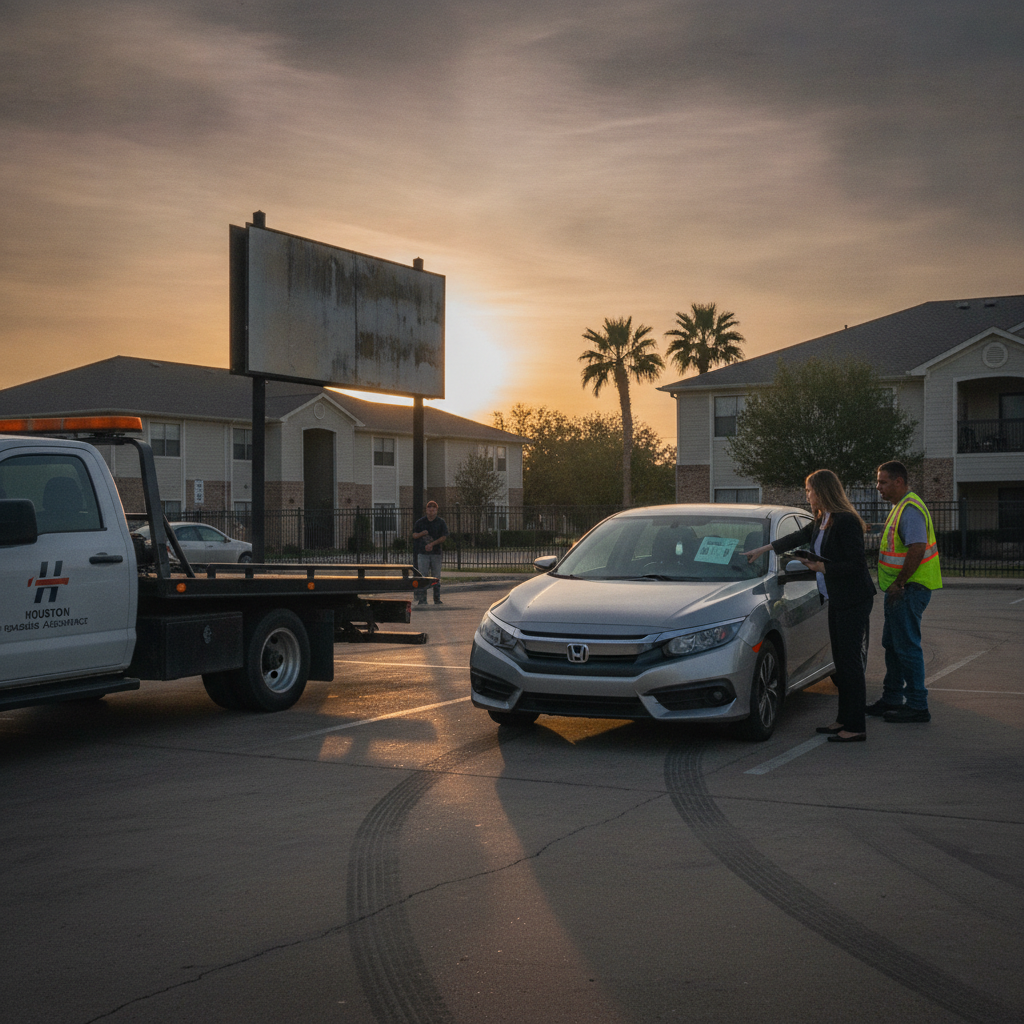
Under Texas Occupations Code §2308.455, a vehicle owner who believes their vehicle was wrongfully towed can request a hearing before a justice of the peace. If a judge finds the tow was not authorized or that your signage was non-compliant, the towing company may be required to return the vehicle and refund towing and storage fees — and in some cases, the property owner can be drawn into the dispute as a co-respondent.
The strongest protection against a successful dispute is a clean paper trail: compliant signage installed before enforcement begins, a current written authorization agreement with a TDLR-licensed towing company, and a documented record of each tow including photographs taken at the time of removal. Your towing partner should be generating and retaining that documentation as a standard part of every enforcement action — not as an afterthought.
Frequently Asked Questions
Can a Houston gym legally tow a vehicle without calling the police first?
Yes. Texas Occupations Code Chapter 2308 does not require police notification before a non-consent private property tow from a properly posted and authorized lot. However, the towing company is required to notify law enforcement after the vehicle has been removed, and must report the tow to the Texas Department of Motor Vehicles within a specified timeframe.
Can we tow vehicles that park in our gym lot overnight without a member tag?
Yes, provided your lot is properly posted, your written authorization with your towing company covers overnight enforcement hours, and those hours are clearly disclosed on your posted signage. Overnight enforcement is common for 24-hour facilities across Harris County and should be specifically addressed in your towing contract.
What if a member’s guest parks in our lot during a class?
Guest vehicles are subject to the same enforcement rules as any other non-authorized vehicle unless your towing authorization explicitly carves out a guest period or your lot has a guest registration process. If your facility allows short-term guest parking, your signage and authorization documents should reflect that — otherwise those vehicles are technically towable and a tow could generate a member complaint.
We share a lot with a restaurant next door. Can we still tow non-gym vehicles?
Only if your lease or shared parking agreement grants you the authority to enforce the specific spaces you are claiming. Towing vehicles from shared spaces where another tenant’s customers have a contractual right to park creates civil liability. Review your lease and easement documentation with your towing partner before initiating enforcement in any shared lot environment in the Houston area.
How quickly can a non-compliant towing company create legal exposure for our property?
Immediately. A single tow executed without compliant signage or proper written authorization gives the vehicle owner grounds to file a Chapter 2308 hearing before a justice of the peace. Even one successful dispute can result in refunded fees, negative reviews from the vehicle owner, and a member relations problem if the towed vehicle belonged to a regular customer. Compliance is not optional — it is the foundation of a defensible enforcement program.
Work With a Compliant Houston Towing Partner Who Understands Your Property Type
Gym and fitness facility parking enforcement requires more than a towing company that shows up when you call. It requires a partner who understands multi-tenant lot dynamics, peak-hour abuse patterns, written authorization structures, and the specific signage requirements under Texas Occupations Code Chapter 2308 — before a single vehicle is removed from your property.
MC Towing Inc serves fitness centers, commercial properties, and multi-tenant developments across Houston, Harris County, Fort Bend County, and the surrounding metro area. We offer compliant signage reviews, written authorization setup, and documented enforcement programs built around your facility’s specific hours, layout, and member verification system.
Ready to get your parking enforcement program compliant and running? Contact MC Towing Inc today for a free property review. We will walk you through what your lot needs before enforcement begins — not after a dispute lands on your desk.