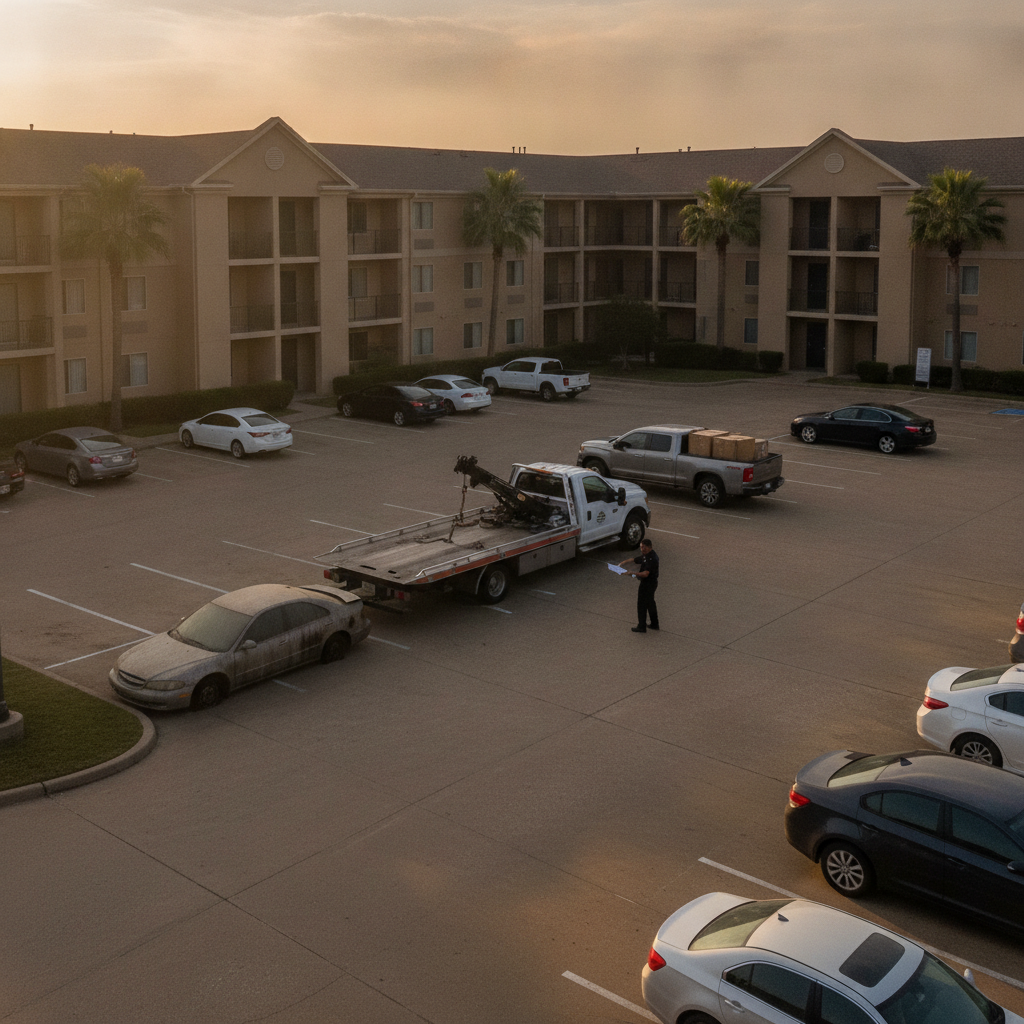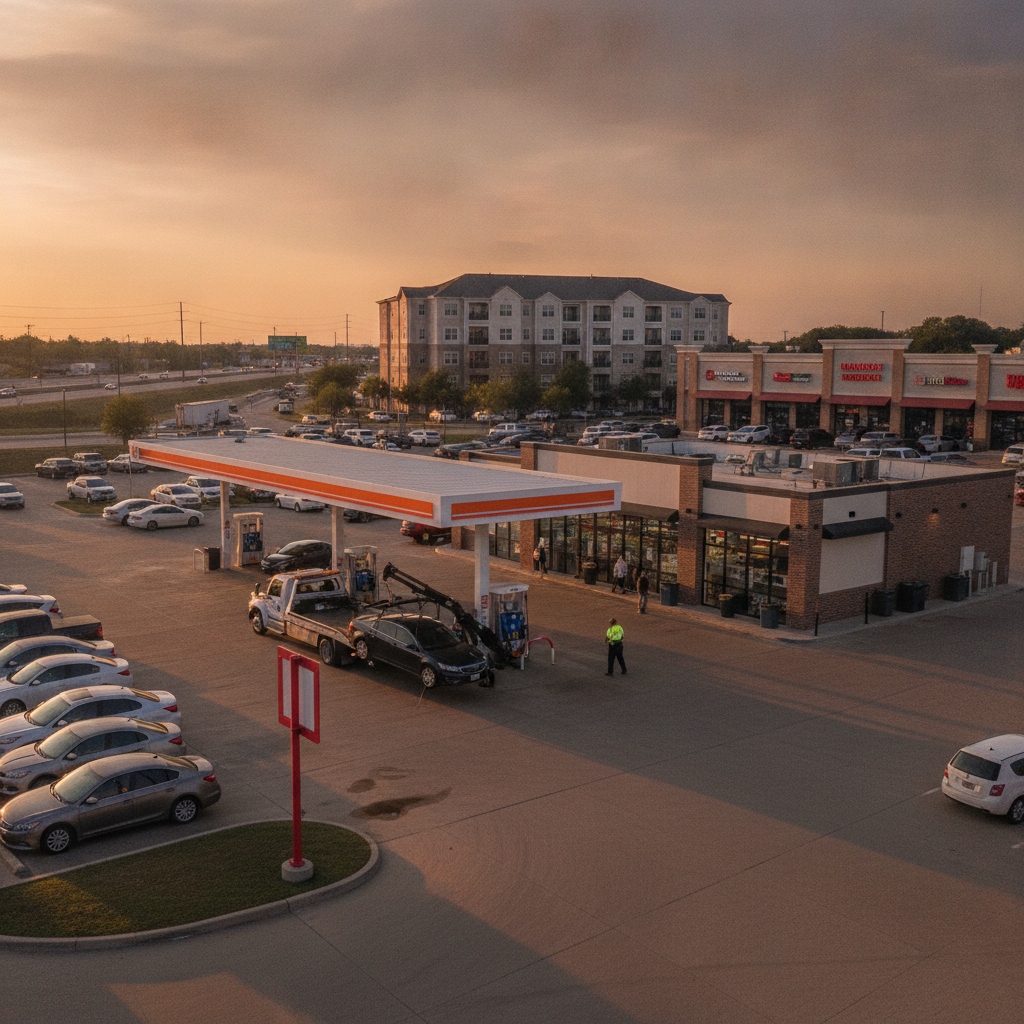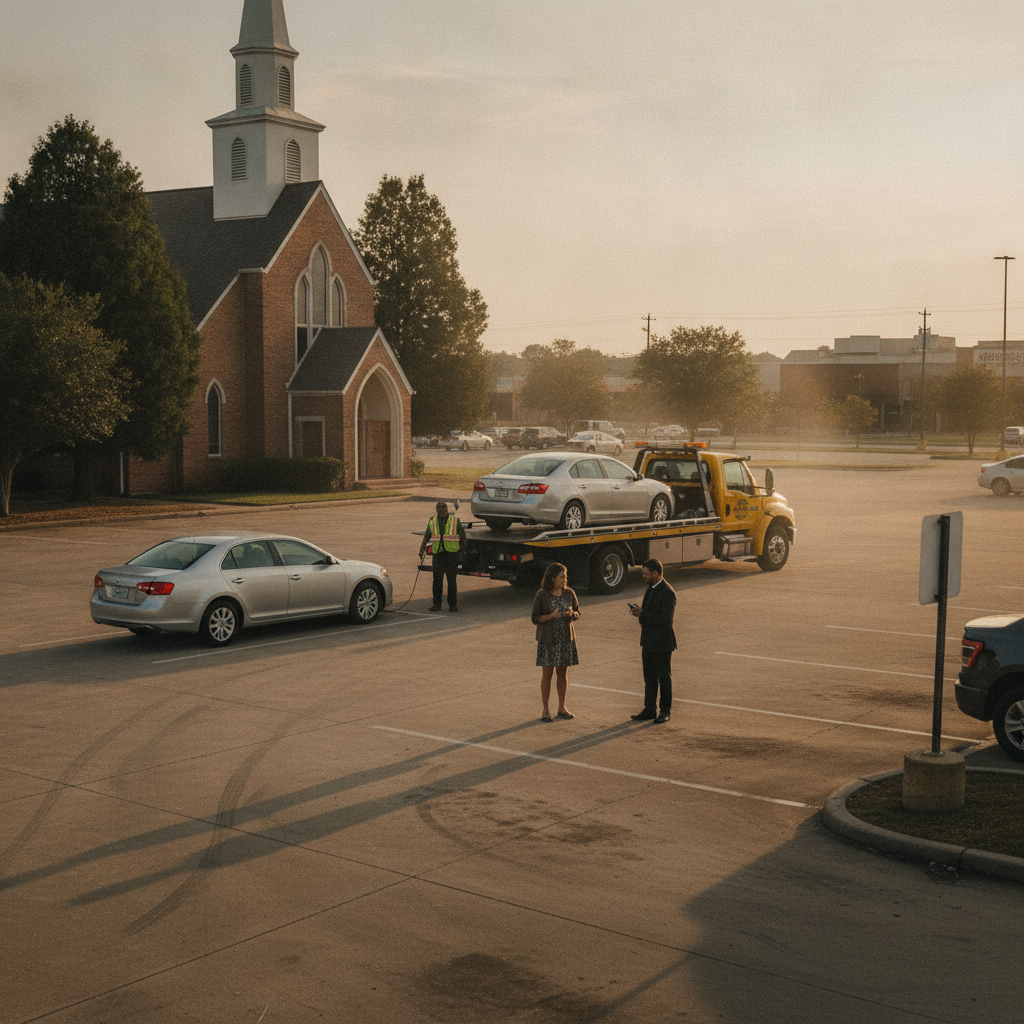
How Do Houston Religious Institutions and Church Property Managers Legally Enforce Parking and Towing for Unauthorized Vehicles?
Yes — your church or religious institution has the full legal right to tow unauthorized vehicles from its property in Houston, and you do not need to apologize for using it. Whether your lot is being used by commuters near the I-10 corridor, adjacent business employees, or people park-and-riding on your property during the week, Texas Occupations Code Chapter 2308 gives you a clear enforcement path. The catch: every step of that process must be done correctly before a tow truck ever touches a vehicle. Get it wrong, and your institution — not the towing company — could be holding the liability bag.
Why Church Parking Lots Are a Prime Target for Unauthorized Use
Religious properties in Houston face a parking enforcement challenge that few other property types share. Large surface lots, generous setbacks, and limited weekday occupancy make church properties an easy target for commuters looking for free parking near major employment corridors. Congregations near the I-69 corridor, Beltway 8, or FM 1960 corridor deal with this constantly — especially those within walking distance of transit stops or office parks.
In Katy, Cypress, and other rapidly growing suburban corridors, new commercial development is pushing spillover parking into the nearest available lot, which is often a church. In urban neighborhoods like Pasadena or areas near Downtown Houston, the problem is even more acute: long-term vehicle abandonment, overnight parking, and vehicles used for informal vehicle storage are common complaints from church facility managers.
The result is a property manager who wants to enforce parking but hesitates — either out of goodwill concerns or genuine uncertainty about what the law actually allows. Both concerns are understandable. But leaving your lot uncontrolled creates real operational problems: blocked delivery access, safety hazards, fire lane obstructions, and in some cases, liability exposure if an unauthorized vehicle is involved in an incident on your property.
What Texas Law Actually Requires Before You Can Tow
Texas Occupations Code Chapter 2308 governs all private property towing in Texas. It does not carve out exceptions for churches, nonprofits, or religious use — and that works in your favor. You have the same enforcement rights as any commercial property owner. But you also have the same compliance obligations.
Before you can authorize a tow from your church property, three things must be in place:
- Written Authorization Agreement: Under Texas Occ. Code §2308.255, a towing company cannot remove a vehicle from private property without written authorization from the property owner or an authorized agent. That authorization must be in writing — not a phone call, not a verbal agreement. Your church board or designated facility manager needs to execute a formal towing authorization agreement with a TDLR-licensed towing company before any enforcement begins.
- Compliant Signage: Texas Occ. Code §2308.301 and §2308.302 establish strict requirements for the signs that must be posted at all entrances to your property. Signs must meet specific size, color, and content standards — including the name and phone number of the towing company, the storage facility address, and notice that unauthorized vehicles will be towed at the owner’s expense. If your signage does not meet these specifications, a tow made under that signage is legally vulnerable. The vehicle owner may have grounds to retrieve their vehicle without paying, and your institution could face complaints filed with TDLR.
- TDLR-Licensed Towing Operator: The towing company you hire must hold a valid TDLR license and operate in compliance with Chapter 2308. Using an unlicensed or non-compliant operator to save money is one of the fastest ways to create liability exposure for your property — including potential civil claims from the towed vehicle owner.
None of these requirements are negotiable. A compliant tow depends on all three being in place before the truck rolls.
The Goodwill Problem — and How to Solve It Without Abandoning Enforcement
Here is the tension most church facility managers are navigating: you do not want to be the congregation that tows a parishioner’s guest or a neighbor’s car without warning. That concern is legitimate. But the solution is not to abandon enforcement — it is to build a tiered system that separates authorized users from unauthorized ones cleanly and defensibly.
A virtual permit management system like iStall makes this practical for religious institutions. Instead of issuing paper hang tags that get lost or transferred between vehicles, iStall allows authorized users — staff, regular attendees, permitted guests — to register their vehicles digitally. Your parking enforcement partner can then identify which vehicles belong and which do not, without requiring your staff to manually patrol or make difficult calls in the moment.
This approach also creates a defensible audit trail. If a towed vehicle owner disputes the tow, you have documented evidence of who was and was not authorized. That documentation matters under Texas Occ. Code §2308.255 and protects your institution in any subsequent TDLR complaint or civil dispute.
For Sugar Land or Pearland congregations with large Sunday attendance and limited weekday use, a virtual permit system also gives you the flexibility to open your lot to authorized guests during services while closing it to unauthorized commuter parking during the week — without changing your signage or reconfiguring your lot.
Signage Compliance: The Step Most Church Properties Get Wrong
If there is one area where religious institution parking enforcement breaks down most often, it is signage. Many churches post a generic “No Parking — Violators Will Be Towed” sign purchased from a hardware store. That sign does not meet the requirements of Texas Occ. Code §2308.301 and §2308.302. A vehicle towed under a non-compliant sign can be recovered by the owner without payment — which means the towing company absorbs the cost, and your enforcement credibility evaporates.
Compliant towing signage in Texas must include:
- The name, address, and phone number of the towing company
- The address of the vehicle storage facility where towed vehicles will be held
- A statement that unauthorized vehicles will be towed at the owner’s expense
- Minimum sign dimensions as specified under TDLR rules
- Posting at all entrances to the property, at a height and location that is visible to a driver entering the lot
A reputable, TDLR-compliant towing partner will conduct a signage compliance review before your enforcement agreement goes into effect. If they do not offer this — or if they are not able to explain exactly what Texas law requires — that is a signal to keep looking. MC Towing Inc offers a no-cost property review that includes signage assessment as part of its private property enforcement setup process.
Handling Abandoned Vehicles on Religious Property
Abandoned vehicle situations are different from standard unauthorized parking. If a vehicle appears to have been left on your church’s lot for an extended period — no movement, deteriorating condition, potentially stripped — the process is governed by Texas Transportation Code §683.002 in addition to Chapter 2308.
Under §683.002, a vehicle left on private property for more than 48 hours can be treated as abandoned and removed. However, documentation matters: your towing company must notify the Texas Department of Motor Vehicles and follow the required hold and notification timeline before the vehicle can be disposed of or sold for storage fees. Skipping this process — even unintentionally — creates legal exposure for both the towing company and the property owner.
In Harris County and Fort Bend County, abandoned vehicle removal on church property is more common than most facility managers expect, particularly in high-traffic suburban corridors where vehicle storage and abandonment rates are elevated. If you have a vehicle on your lot that has not moved in days, do not attempt to handle removal on your own. Call a licensed towing partner who knows the documentation requirements under §683.002.
What a Compliant Enforcement Partnership Looks Like for Your Institution
A well-structured private property towing relationship for a religious institution should include the following at minimum:
- A signed written authorization agreement that names authorized agents (facility manager, head pastor, board designees) who can call for a tow
- Compliant signage installed by or verified by your towing partner prior to any enforcement
- A documented vehicle permit or exemption list for staff, regular attendees, and scheduled guests
- A clear protocol for after-hours enforcement — because unauthorized parking does not limit itself to business hours
- A no-cost-to-property towing model, where enforcement fees are collected from the vehicle owner at the storage facility, not billed to your congregation
The towing company that offers the lowest rate is rarely the one that keeps you compliant. In a legally sensitive enforcement environment like private property towing in Texas, the cost of a non-compliant tow — complaints, civil disputes, TDLR violations — far exceeds any savings on the tow fee itself.
Frequently Asked Questions: Church and Religious Property Parking Enforcement in Houston
Can a Houston church tow a vehicle without posting signs first?
No. Texas Occ. Code §2308.301 requires compliant signage to be posted at all property entrances before any tow can be legally made. A tow made without compliant signage is legally vulnerable and can be disputed by the vehicle owner.
Does our church need a written contract with the towing company before they can tow anyone?
Yes. Texas Occ. Code §2308.255 requires written authorization from the property owner or an authorized agent before a vehicle can be removed from private property. A verbal agreement or a standing phone-call arrangement is not sufficient.
Can we authorize tows only during specific days or hours — for example, weekdays only?
Yes. Your written authorization agreement can specify enforcement windows. This is a common approach for religious institutions that want to allow weekend event parking but restrict weekday commuter use. Your towing partner and signage must reflect this schedule accurately.
What happens if someone claims they had permission to park there but we towed them anyway?
This is exactly why a documented vehicle permit system matters. If your institution uses iStall or another permit management tool, you have a verifiable record of who was authorized. Without that documentation, a disputed tow becomes a he-said/she-said situation that is harder to defend.
Is there a cost to our church for setting up a private property towing enforcement agreement?
In a properly structured private property towing arrangement, there is no cost to the property owner. Towing and storage fees are collected from the vehicle owner at the storage facility. Your institution provides the authorization and compliant signage — your towing partner handles the rest.
Get a Free Compliance Review for Your Property
If your Houston-area church or religious institution is dealing with unauthorized parking and you are not sure whether your current setup meets the requirements of Texas Occupations Code Chapter 2308, the right first step is a property review — not a tow. MC Towing Inc works with religious institutions, community organizations, and property managers across Houston, Katy, Cypress, Pasadena, and the surrounding Harris County and Fort Bend County areas to establish compliant, enforceable parking programs that protect your property without creating liability exposure.
Contact MC Towing Inc today to schedule your free property review. We will assess your signage, your current authorization setup, and your enforcement needs — and walk you through exactly what it takes to enforce parking legally and consistently on your property.