How Do Houston Hotel and Extended-Stay Property Managers Legally Enforce Parking and Towing for Unauthorized Vehicles?
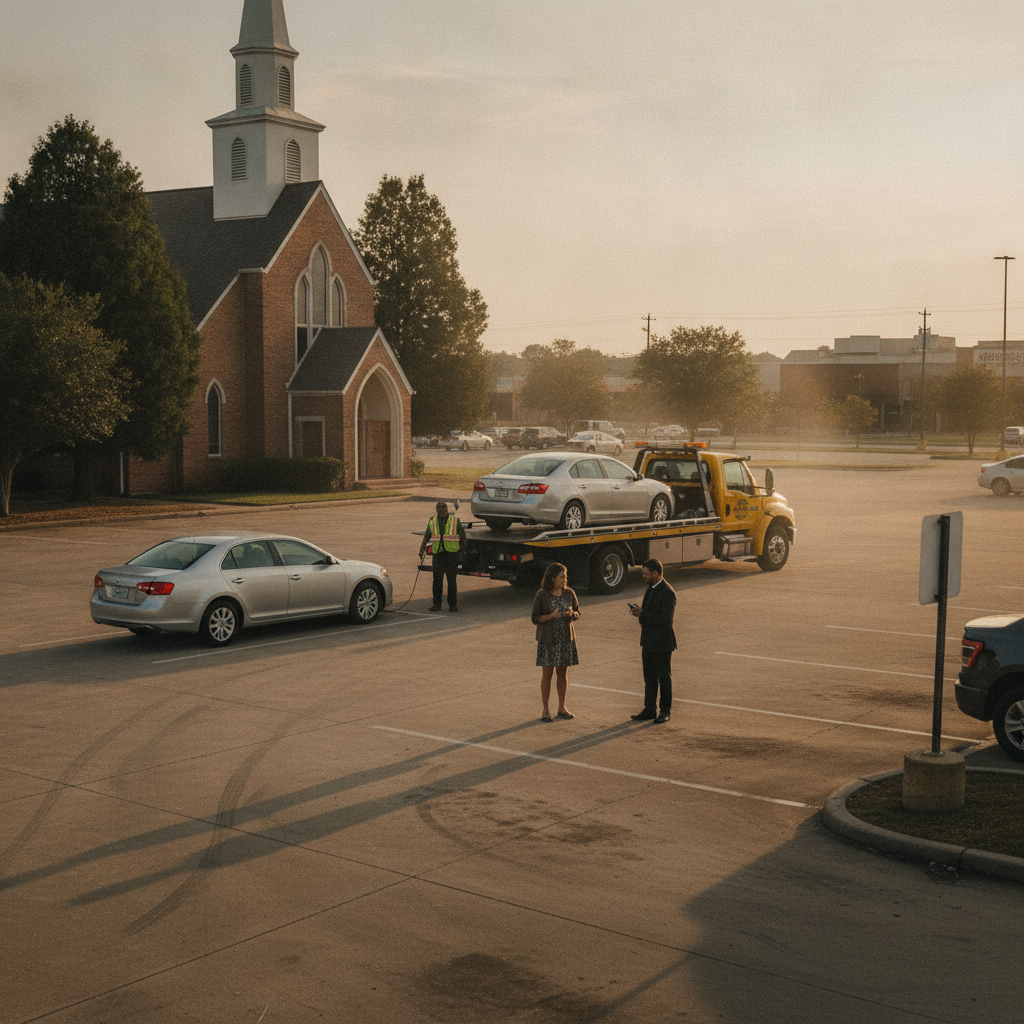
Hotel and extended-stay property managers in Houston can legally tow unauthorized vehicles from their lots — but only when specific requirements under Texas Occupations Code Chapter 2308 are met. That means a signed towing authorization agreement with a TDLR-licensed company, compliant posted signage, and a clear process for distinguishing between a guest vehicle and a vehicle that has no business being on your property. Get any of those elements wrong, and the tow you authorized today could become a lawsuit or a TDLR complaint tomorrow.
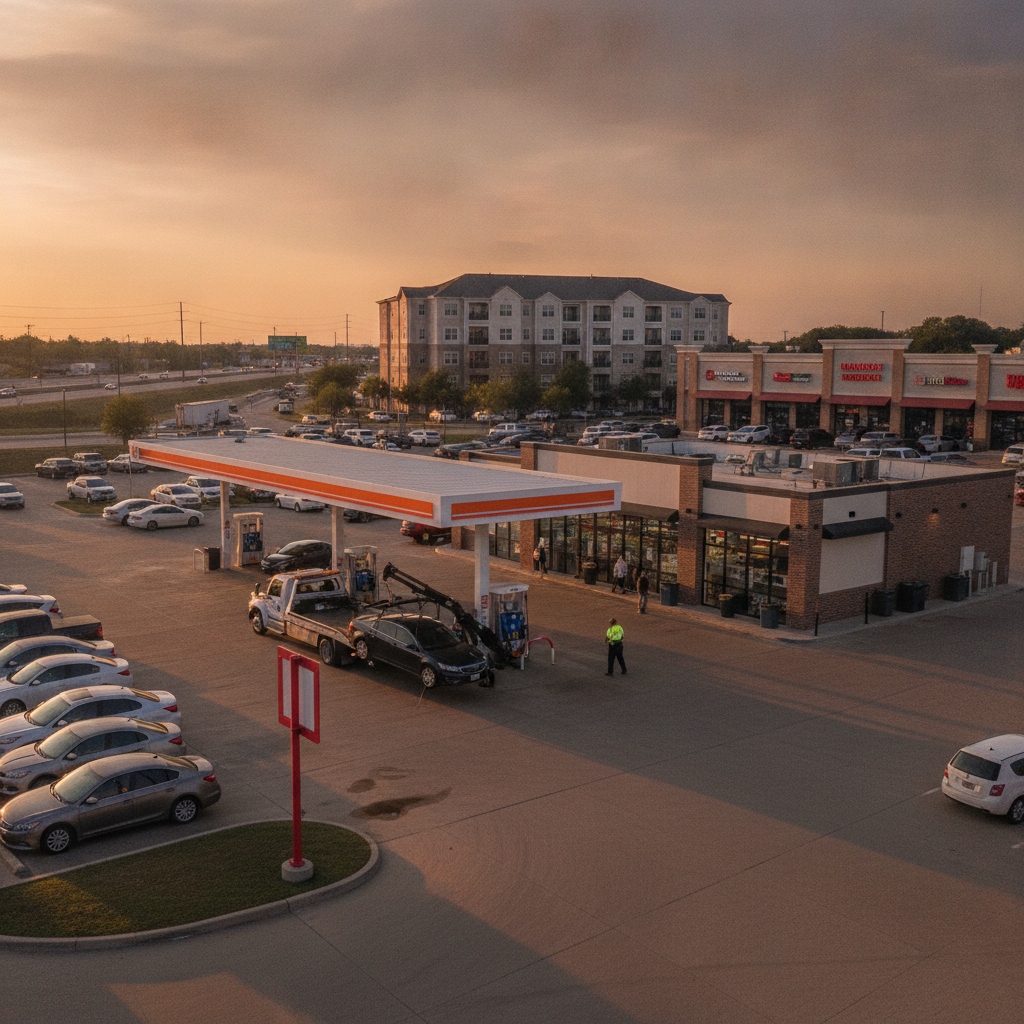
This is a topic that almost no local towing company addresses directly for hospitality properties — and that gap costs hotel managers. The enforcement challenges you face at a 120-room property off the I-10 corridor or a long-term extended-stay near Pasadena are genuinely different from those facing an apartment complex or a retail strip center. You have daily transient guests, weekly and monthly residents, staff parking, vendor vehicles, and in many Houston submarkets, drivers who treat overflow hotel lots as free long-term parking because they are near a freeway exit or a major employment hub.
Why Hotel Parking Enforcement Is Legally Distinct From Other Property Types
Most towing guidance written for private property managers assumes a relatively stable population of known users — tenants, residents, permit holders. A hotel parking lot is fundamentally different. Your legitimate users turn over daily or weekly. That turnover creates real ambiguity: a vehicle that has been sitting in the same spot for five days may belong to a checked-out guest who forgot their car, a current long-term guest, or someone completely unrelated to your property who spotted an unmonitored lot.
Texas law does not create a separate enforcement category for hospitality properties. Under Texas Occupations Code §2308.255, any tow from private property must be authorized by the property owner or a person who has written authorization from the property owner. That written authorization — your towing contract — must specify the conditions under which vehicles may be towed, and the towing company executing the tow must be TDLR-licensed. There are no shortcuts here regardless of property type.
What makes hotel enforcement strategically different is the need for an internal process that protects paying guests while still giving you a legal mechanism to remove vehicles that clearly do not belong. A front desk manager authorizing a tow without a proper documented process is a liability. A towing company executing that call without a written agreement on file is operating outside the law.
Signage Requirements Under Texas Law — What Your Lot Must Display
Before any vehicle can be legally towed from your hotel or extended-stay property, your lot must have signage that meets the specifications in Texas Occupations Code §2308.301 and §2308.302. These are not suggestions — they are statutory requirements, and a missing or non-compliant sign can invalidate an otherwise legal tow and expose you to a wrongful tow claim.
At minimum, your signs must:
- State that unauthorized vehicles will be towed at the owner’s expense
- Display the name and telephone number of the towing company authorized to remove vehicles
- Be posted at each entrance to the parking facility and at intervals sufficient to be visible from any parking space
- Meet minimum size and reflectivity standards specified under the statute
Many hotel managers in the Houston area — particularly at older properties along Beltway 8 or near Baytown — are operating with signs that were posted years ago and have never been reviewed against current TDLR standards. If your towing company has never walked your lot and confirmed signage compliance, that is a problem you should address before the next tow, not after.
The Extended-Stay Complication: When Does a Guest Become a Tenant?
Extended-stay properties in particular face a legal gray zone that almost no competitor towing content addresses: the question of when a long-term hotel guest acquires rights that limit your ability to tow their vehicle without additional process.
Texas law does not define a bright-line rule for when a hotel guest becomes a tenant for purposes of property towing. However, extended stays of 30 days or more can trigger residential tenancy arguments under Texas Property Code that complicate enforcement. If a guest has been in a room for six weeks, paid weekly, and has a vehicle registered to your address, removing that vehicle without notice may create more legal exposure than it resolves.
This is not a reason to avoid enforcement — it is a reason to work with a towing partner who understands the nuance and can advise on documentation before a tow is executed, not after. A TDLR-compliant towing company operating under a written property authorization agreement will help you build a documentation trail that protects you regardless of how long a guest has been on property.
Abandoned Vehicle Removal: The 48-Hour Rule and Hotel Lots
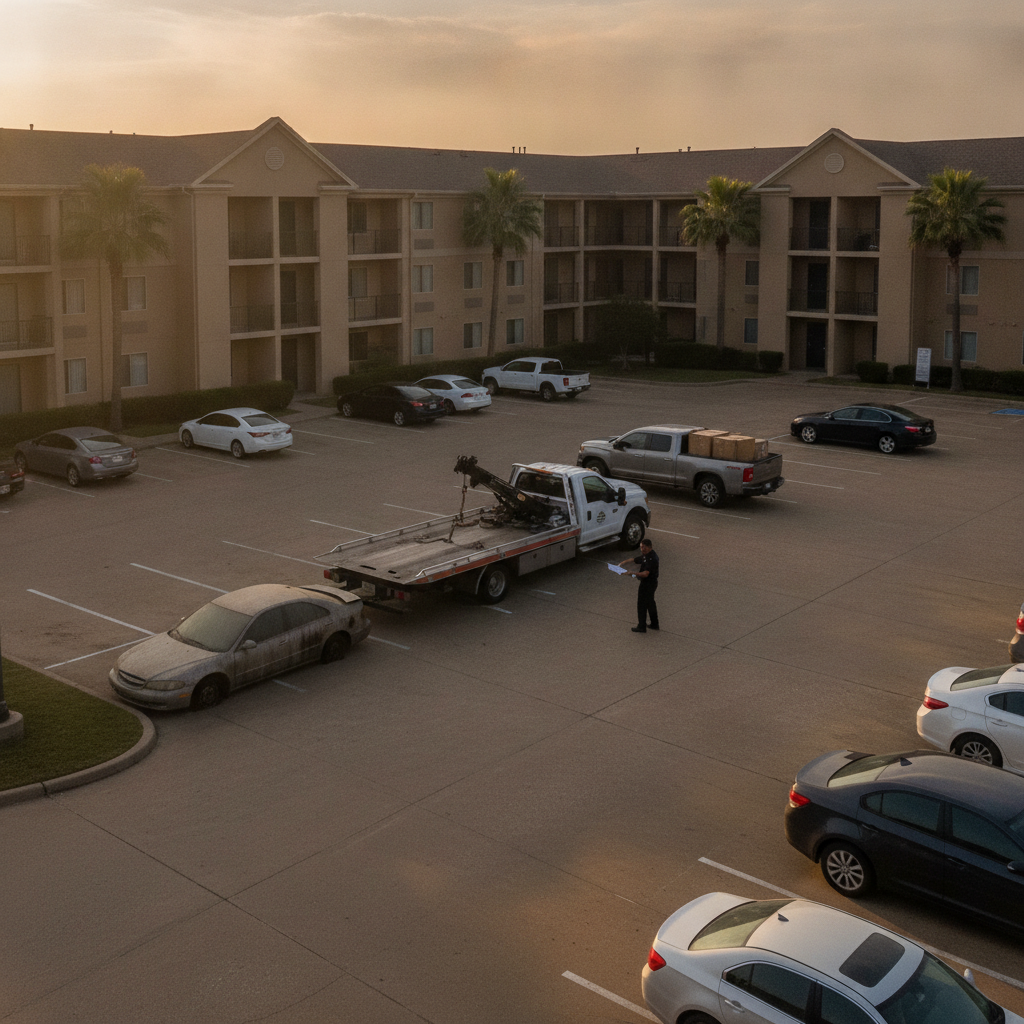
When a vehicle is genuinely abandoned on your hotel lot — a checked-out guest who left their car, an unregistered vehicle sitting in the back row, or a vehicle with no connection to any current or recent reservation — you need to follow the process under Texas Transportation Code §683.002 before removal if the vehicle meets the statutory definition of an abandoned vehicle.
Generally, a vehicle that has been left on private property without consent and has been there for more than 48 hours may be removed as an abandoned vehicle. The documentation and notification requirements are specific, and skipping steps creates liability. Your towing company should be handling this process correctly and maintaining the records. Abandoned vehicle removal handled under proper statutory process protects you from wrongful tow claims and ensures the vehicle can be legally processed through the storage and notification chain.
What a Compliant Towing Authorization Agreement Should Cover for Hotel Properties
If you are a hotel or extended-stay manager in the Houston area reviewing your current towing contract — or considering signing one for the first time — here is what that agreement should address specifically for your property type:
- Clearly defined authorization scope: Who on your staff can authorize a tow? Front desk managers? General managers only? The contract should name the position, not just a person.
- Guest vehicle verification process: The agreement should include a step requiring the towing company to check with the front desk before removing any vehicle that could plausibly belong to a current guest.
- Documentation retention: Every tow should generate a written record tied to your property — date, time, vehicle description, who authorized, why it qualified for removal. This is your defense if a guest disputes the tow.
- Signage compliance review: The contract should include a signage audit at the start of the relationship, not just a verbal assurance that your signs are fine.
- After-hours protocol: Hotels operate 24 hours. Your towing partner needs to be reachable at 2 a.m. and have a protocol for overnight authorization requests.
Private property towing for hospitality properties requires this level of specificity. A generic contract written for apartment complexes will leave gaps that create liability for hotel managers.
The Non-Compliant Towing Company Problem in the Houston Market
Harris County and the surrounding Houston metro have no shortage of towing operators willing to sign a hotel property up quickly and tow aggressively — often without verifying TDLR licensure, maintaining proper documentation, or ensuring your signs are compliant. Near high-traffic corridors like I-45 North in Spring or the I-10 corridor near Katy, some operators compete primarily on price or speed of response, not on legal compliance.
For a hotel manager, using an unlicensed or non-compliant towing operator does not just expose the towing company to TDLR action. It exposes you. Texas Occupations Code Chapter 2308 places affirmative obligations on the property owner authorizing the tow — not just the company executing it. If your towing company is operating without a valid TDLR license, improperly documenting tows, or using non-compliant signs, you are the one who ends up defending a wrongful tow claim in small claims court or responding to a TDLR consumer complaint.
Before you sign any towing authorization agreement, verify the company’s TDLR license directly at the TDLR license verification portal. A reputable towing partner will give you their license number without being asked.
Frequently Asked Questions: Hotel and Extended-Stay Parking Enforcement in Houston
Can a hotel in Houston tow a vehicle belonging to a checked-out guest who left their car?
Yes, but you need to follow a documented process. If the guest has checked out and left a vehicle, that vehicle may qualify for removal as an abandoned vehicle under Texas Transportation Code §683.002 once 48 hours have elapsed. You should document the checkout date, confirm no reservation exists, and have your authorized towing company handle removal with proper notification procedures. Do not simply authorize a tow the moment checkout occurs without documentation.
Are the signage requirements for hotel parking lots the same as for apartment complexes?
The statutory signage requirements under Texas Occupations Code §2308.301 and §2308.302 apply to all private property, including hotel lots. There is no hospitality-specific exemption or variation. The same size, content, and placement standards apply whether you are managing a motel off Beltway 8 or a full-service hotel in the Pearland area.
Can my front desk staff authorize a tow directly, or does it have to be the property manager?
Your towing authorization agreement must specify who is permitted to authorize tows on behalf of the property. As long as that person has written authorization from the property owner under Texas Occupations Code §2308.255, the authorization is valid. Most hotel properties designate the general manager and on-duty managers — but that designation needs to be in writing in the contract, not assumed.
What should I do if a vehicle is blocking my hotel’s fire lane or accessible parking space?
Fire lane and ADA-space violations can typically be towed without the extended documentation process required for abandoned vehicles, provided your signage is compliant and you have a written towing authorization agreement. Your towing partner should respond quickly for these violations since they create safety and ADA compliance exposure for your property. Make sure your signs specifically identify fire lanes and accessible spaces as tow-away zones.
We have guests parking for free while using nearby businesses — can we tow them?
Yes, if your lot is posted with compliant signage limiting parking to registered guests and your authorization agreement covers non-guest vehicles. This is a common problem for hotels near Pasadena, Baytown, and other high-traffic commercial areas in Harris County and Fort Bend County where commuters and shoppers target hotel lots. A consistent enforcement program with compliant signage is the most effective deterrent.
Work With a Towing Partner Who Understands Hospitality Property Enforcement
MC Towing Inc serves hotel and extended-stay properties across Houston and the surrounding area — from Harris County submarkets along I-69 to properties near the I-10 corridor in Katy. We operate under a written authorization model, carry current TDLR licensing, and provide signage compliance reviews as part of every new property relationship. We do not tow first and document later.
If you are a hotel or extended-stay manager who has not reviewed your towing authorization agreement in the last 12 months — or you are signing up a new property and want to get the enforcement structure right from the start — contact us for a free property review. We will walk your lot, review your signage, and help you build a towing program that protects your guests and your property. Reach out to MC Towing Inc here.