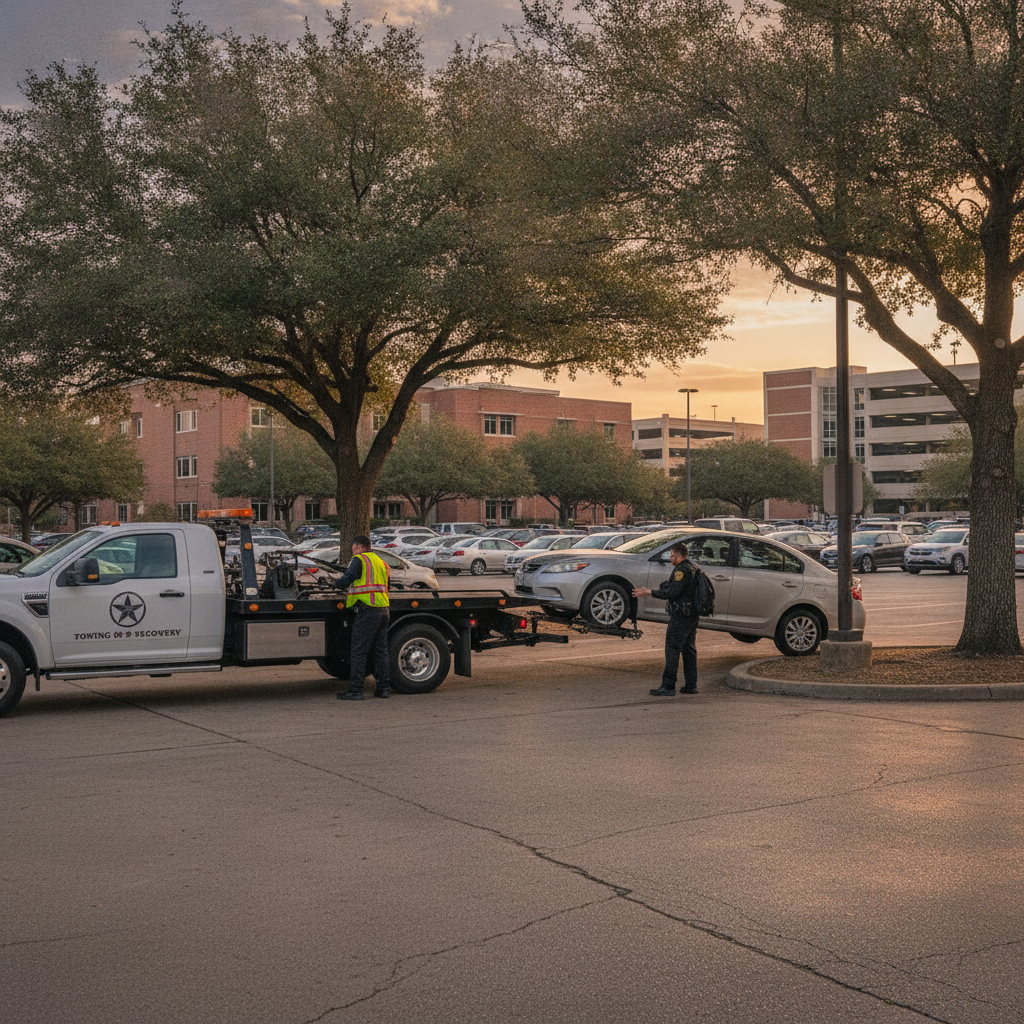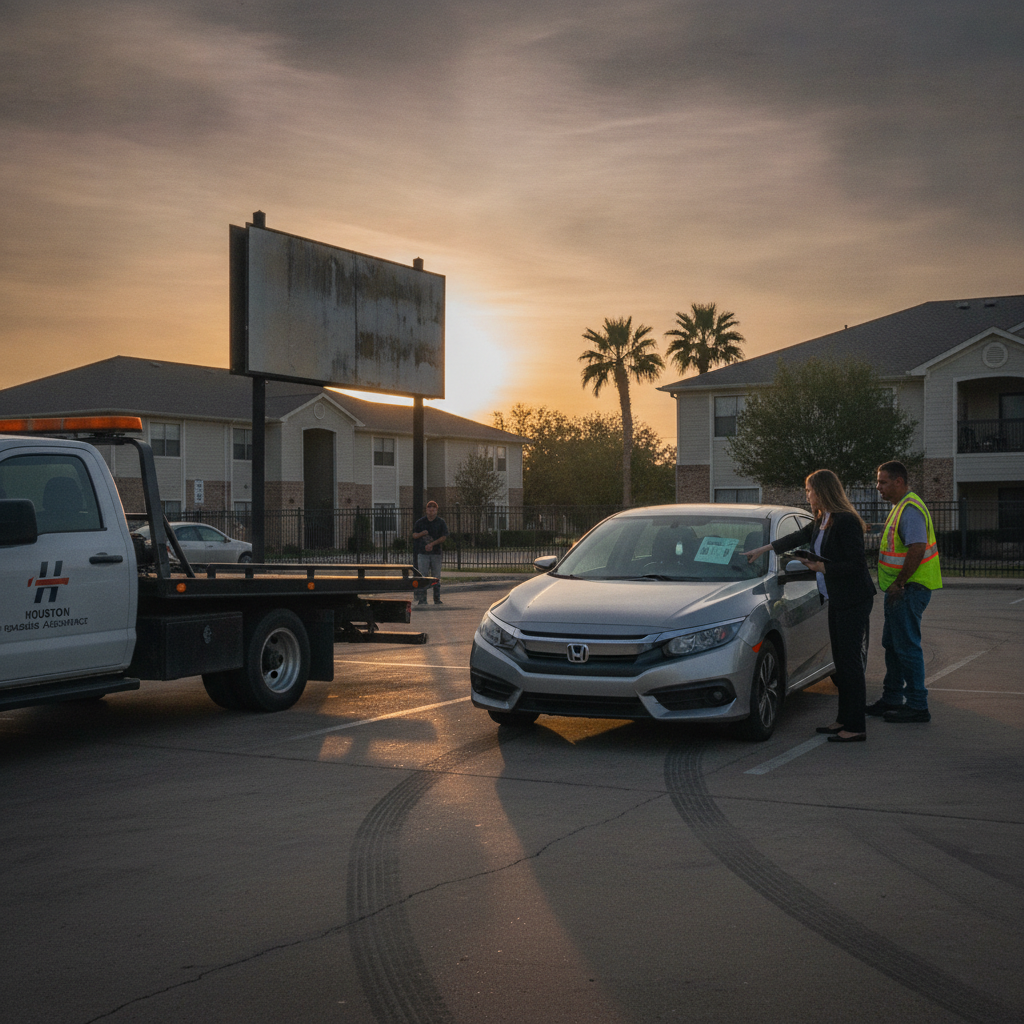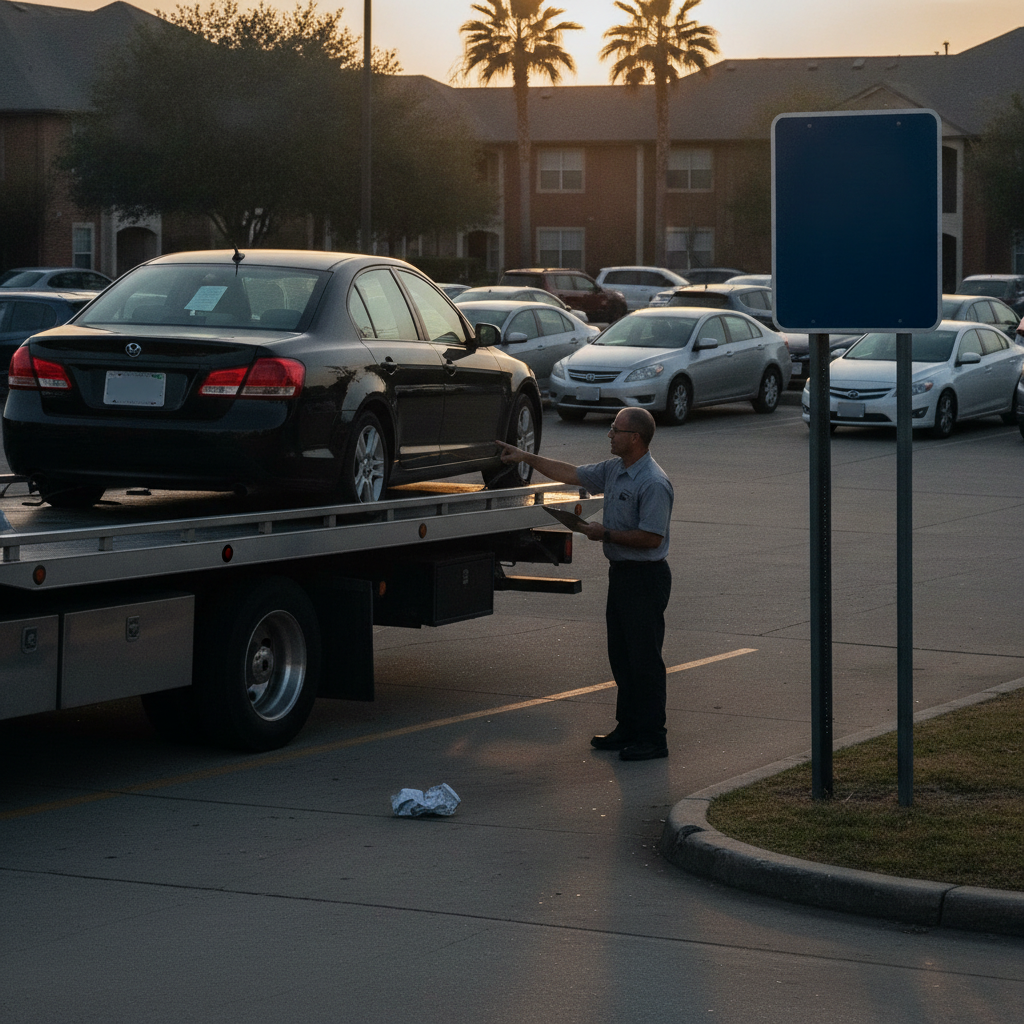
How Do Houston Towing Companies Legally Tow a Vehicle From a Private Property When the Vehicle Is Displaying a Temporary Paper Tag or Dealer Plate?
Yes — a vehicle displaying a temporary paper tag or dealer plate can legally be towed from private property in Houston, but the process has specific documentation requirements that both the towing company and the property manager must get right. If you’re a property manager, HOA board member, or apartment community director who has been hesitant to call a tow on a paper-tagged vehicle out of fear of liability, this article is for you. The law does not exempt these vehicles from private property enforcement — but the way you document and authorize the tow matters enormously.
Why Temporary Tags and Dealer Plates Create Confusion for Property Managers
Temporary paper tags are issued by Texas dealerships, private sellers completing title transfers, and in some cases county tax offices. They are legal, state-issued credentials that establish a vehicle’s registration status for a defined period — typically 30 days in Texas. Dealer plates are metal or permanent plates assigned to licensed dealerships for use on vehicles that are technically still dealer inventory.
The confusion for property managers — and frankly, for some towing companies — is that these tags don’t appear in standard license plate lookup databases the same way a registered plate does. When a tow operator runs the tag and gets no return, some operators get nervous and decline to proceed. Others proceed without adequate documentation and expose the property to liability. Neither outcome serves you.
In rapidly growing communities across Cypress, Katy, and Pearland — where new apartment communities and HOA-governed subdivisions are being built at a significant pace — paper-tagged vehicles are increasingly common. Residents buy vehicles, move in, and park them before registration is complete. In some cases, unauthorized third parties park recently purchased vehicles on your property specifically because the tag is hard to trace. Understanding how your towing partner should handle both scenarios is not optional — it’s a compliance requirement.
What Texas Occupations Code Chapter 2308 Actually Requires
Texas Occupations Code Chapter 2308 governs non-consent towing in Texas — meaning tows where the vehicle owner did not call the tow company. Private property towing falls squarely under this chapter. The statute does not provide a carve-out or special exemption for vehicles displaying temporary tags or dealer plates. The same rules apply.
Under Texas Occ. Code §2308.255, a towing company may tow a vehicle from private property only when the tow is authorized by the property owner or a person authorized by the property owner. That authorization must be documented. The towing company is required to maintain a record of who authorized the tow, when it was authorized, and why. Verbal authorizations have to be confirmed in writing as close to the time of the tow as practicable.
Under Texas Occ. Code §2308.252, the towing company must also make reasonable efforts to identify the vehicle and its registered owner before completing a non-consent tow. For a paper-tagged vehicle, this step requires more work than a standard plate lookup. A compliant towing company operating in Houston will know how to document the tag number, photograph the tag legibly, and note any available Vehicle Identification Number (VIN) visible through the windshield. The VIN is the most reliable identifier for a vehicle with a temporary or dealer tag — a TDLR-licensed operator should be pulling the VIN and using it to initiate any required owner notification.
Signage is not waived either. Under §2308.301 and §2308.302, your property must have compliant towing and parking restriction signs posted at all vehicle entrances before any non-consent tow is authorized. This requirement applies regardless of what type of tag the vehicle is displaying. If your signage is not up to code, the tow is legally vulnerable — paper tag or not.
Learn more about private property towing compliance in Houston.
The VIN Is the Key — And Your Towing Company Should Know That
When a vehicle has a paper tag that is expired, obscured, or unreadable — a situation that comes up regularly at apartment communities near the I-10 corridor and in higher-density neighborhoods across Harris County — the towing company’s obligation to identify the vehicle does not disappear. It shifts to the VIN.
A compliant, TDLR-licensed towing operator will photograph the VIN plate visible through the lower driver’s-side windshield, document it in the tow record, and use it to initiate the required owner notification with the Texas Department of Motor Vehicles. This is how a legally defensible tow on a paper-tagged vehicle gets done. If the towing company you’re working with doesn’t know this process — or skips it because “the tag is expired anyway” — that is a serious compliance gap that transfers liability back to your property.
This is one of the clearest distinctions between a compliant local towing partner and an operator who is cutting corners. Several towing companies operating in the greater Houston metro lack clear, documented protocols for paper-tag vehicles specifically. If you haven’t asked your current towing vendor how they handle VIN documentation on unregistered or temporarily tagged vehicles, that conversation needs to happen today.
Dealer Plates: A Separate but Related Issue
Dealer plates present a slightly different challenge. These plates are assigned to a licensed Texas dealership — not to the vehicle itself. A vehicle displaying a dealer plate may be on a test drive, may have been sold but not yet re-plated, or may be parked on your property by a dealership employee who works nearby. In some cases, dealer plates are misused or displayed on vehicles that have no legitimate connection to the dealership listed.
For private property enforcement purposes, a dealer plate does not give a vehicle the right to park on your property without authorization. The same non-consent towing rules under Chapter 2308 apply. The towing company should photograph the plate clearly, document the dealership name and number displayed, and note the VIN. If the vehicle is a legitimate dealer unit, the dealership’s contact information is often traceable through the Texas DMV — and that notification should be initiated promptly after the tow.
What you should not do as a property manager is assume that a dealer plate makes a tow legally riskier than a standard plate tow. The risk level is similar — it just requires more precise documentation on the front end. A properly authorized tow with full VIN documentation and compliant signage on your property is legally defensible regardless of what tag the vehicle is displaying.
What Your Towing Contract Should Address
If your property is in Sugar Land, Pearland, or anywhere else in Fort Bend County where HOA-governed communities are dense and vehicle turnover is high, your towing contract with your enforcement partner should specifically address how paper-tag and dealer-plate vehicles are handled. Look for these provisions:
- VIN documentation protocol — the company should confirm in writing that VINs are recorded for all non-consent tows involving temporary or unregistered vehicles.
- Photo documentation requirements — both the tag or plate and the VIN should be photographed and retained in the tow record.
- Owner notification timeline — Texas law requires notification to the registered owner and the law enforcement agency with jurisdiction. For paper-tag vehicles, this process should be initiated using the VIN within the required timeframe.
- Authorization audit trail — every tow should have a documented, time-stamped authorization from an authorized property representative. No compliant towing company should be towing vehicles from your property without this on record.
Explore parking enforcement and property solutions for Houston communities.
Frequently Asked Questions
Can I tow a vehicle with an expired temporary paper tag from my apartment complex parking lot in Houston?
Yes. An expired temporary tag does not give a vehicle the right to remain on your private property. However, the tow must still be authorized in compliance with Texas Occ. Code §2308.255, your signage must meet the requirements under §2308.301 and §2308.302, and the towing company must document the VIN and initiate proper owner notification. Expiration of the tag does not simplify the process — it just adds urgency.
Does a vehicle with a dealer plate have any special legal protection from being towed off private property?
No. A dealer plate does not confer any special parking rights on private property. The vehicle is subject to the same non-consent towing rules as any other vehicle. The towing company should document the dealer plate number, the dealership name displayed, and the vehicle’s VIN. Notification should be directed to the dealership if the vehicle cannot be tied to an individual registered owner.
What if the paper tag is unreadable or missing entirely — can the vehicle still be towed?
Yes, but the VIN becomes even more critical in that situation. A TDLR-licensed towing operator should be able to record the VIN from the windshield plate and use it to complete all required documentation. A missing or unreadable tag actually strengthens the case for removal in many situations, but it does not eliminate the documentation requirements.
How does this issue come up for HOA communities in Katy and Cypress?
Newly developed communities along the Highway 290 corridor and I-10 West have large concentrations of residents who purchase vehicles during the move-in period. Temporary tags are common. HOA boards often hesitate to enforce against paper-tagged vehicles because they assume the resident is in the process of registering. That assumption may or may not be accurate — and it creates a window where non-residents also exploit paper tags to park without authorization. Clear parking rules, a documented enforcement contract, and a virtual permit system can eliminate most of this ambiguity before it becomes a dispute.
Can a property manager authorize a tow of a paper-tagged vehicle without being physically present at the property?
Yes, provided your towing contract and your property’s towing authorization procedures allow for remote or on-call authorization. The authorization must still be documented with the time and identity of the authorizing party. This is exactly the kind of scenario where a documented authorization protocol — rather than a verbal phone call with no record — protects your property from a later challenge by the vehicle owner.
Work With a Towing Partner Who Gets the Details Right
Temporary paper tags and dealer plates are not an edge case anymore in Houston. With high vehicle sales volume across Harris County and rapid residential growth in communities like Cypress, Katy, and Sugar Land, paper-tagged vehicles in your parking lot are a regular occurrence. Your towing enforcement partner needs a clear, documented protocol for handling them — not a case-by-case judgment call that leaves your property exposed.
MC Towing Inc is a TDLR-licensed towing company serving Houston and the surrounding area. We work with apartment communities, HOA boards, and commercial property managers to build compliant enforcement programs that hold up when challenged — including tows involving temporary tags, dealer plates, and vehicles with non-standard registration. We know Chapter 2308 and we document every tow to protect your property, not just ours.
Ready to review your current enforcement program or set up a compliant towing contract? Contact MC Towing Inc for a free property review. We’ll assess your signage, your authorization procedures, and your documentation practices — and tell you exactly where you stand before a vehicle owner or their attorney does.