What Should a Houston Property Manager Do When a Towing Company Damages a Vehicle During a Private Property Tow?
If a towing company damages a vehicle during a private property tow in Houston, the property manager who authorized that tow could end up in the middle of a dispute — even if the towing company caused the damage. The answer to who is legally responsible depends almost entirely on whether your towing partner is licensed, properly insured, and operating under a written contract that clearly defines liability. This is one of the most underexplored topics in private property towing, and one of the most expensive mistakes a property manager can make by ignoring it upfront.
Why Towing Damage Claims Are More Common Than You Think
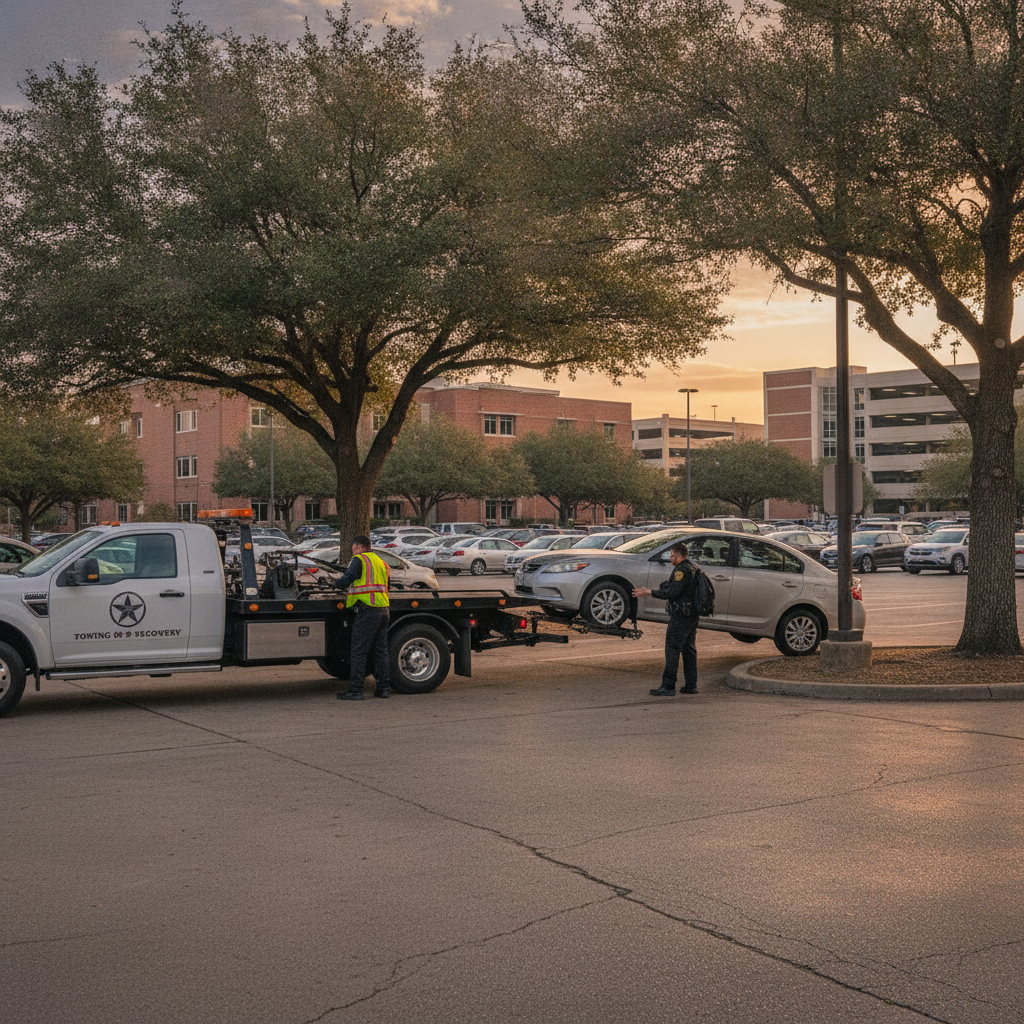
Private property towing in Houston is high-volume work. Apartment communities across Harris County, HOA-governed subdivisions in Cypress and Katy, and commercial parking lots throughout Spring Branch and Greenspoint are calling for unauthorized vehicle removal regularly — sometimes multiple times per week. With that volume comes risk. Vehicles get scraped during hook-up, bumpers catch on wheel lifts, side mirrors clip tight parking stall corners, and interiors can be damaged if a car is towed in park without proper four-wheel dollying.
When that damage happens, the vehicle owner is going to come looking for answers. And if they can’t get satisfaction from the towing company directly, they will come to your leasing office, your HOA management company, or your commercial property office next. Some will send a demand letter. Some will file a complaint with the Texas Department of Licensing and Regulation (TDLR). A few will take it to small claims court. Your exposure depends on how your towing relationship is structured before that call ever comes in.
Who Is Legally Liable — The Towing Company, the Property, or Both?
Under Texas law, the towing company — not the property owner — is the party that physically operates the tow. Texas Occupations Code §2308.255 establishes authorization requirements for private property tows, meaning the property owner or manager provides consent, and the towing company executes the removal. That distinction matters for liability purposes.
If a towing company damages a vehicle through negligent operation — improper hook-up, failure to use wheel dollies when required, inadequate restraint during transport — the legal claim for that damage belongs against the towing company, not the property. However, property managers can still face secondary exposure in certain situations:
- You hired an unlicensed or non-TDLR-compliant towing company. If the operator wasn’t properly licensed under Texas Occupations Code Chapter 2308, your decision to hire them could be framed as contributory negligence.
- Your towing contract does not include an indemnification clause. Without a written agreement that clearly places liability for vehicle damage on the towing company, a plaintiff’s attorney has more room to argue shared responsibility.
- You authorized a tow on a vehicle that a reasonable person could see presented unusual risk — a low-clearance vehicle parked in a tight structure, for example — and failed to flag that to the operator.
The cleaner your authorization documentation, the tighter your towing contract, and the better-credentialed your towing partner, the less exposure you carry.
What Texas Law Requires From Licensed Towing Companies on Insurance
This is the section most competitor websites in Houston completely skip over — and it’s arguably the most important piece of information a property manager needs before signing a towing service agreement.
TDLR-licensed towing companies operating in Texas are required to maintain minimum levels of liability insurance as a condition of their license. Specifically, towing companies must carry cargo insurance covering vehicles in their custody, as well as general liability coverage. When a towing company damages a vehicle in its care, custody, or control, that damage claim runs through the towing company’s cargo or garage keepers liability policy — not your property’s general liability policy.
Before you sign any private property towing agreement, you should request a current certificate of insurance from the towing company. That certificate should list your property as an additional insured on their liability policy. If a towing company cannot or will not produce that documentation, treat it as a disqualifying factor — not a minor oversight.
Discount and unlicensed towing operators — which remain a real problem across the Houston metro — frequently operate with lapsed or inadequate coverage. When a damage claim surfaces on one of those tows, the vehicle owner has nowhere to collect except from the party who authorized the removal: your property.
The Steps You Should Take Immediately After a Damage Claim Is Reported
When a vehicle owner contacts you claiming their car was damaged during a tow from your property, your response in the first 24 to 48 hours matters significantly. Here is what property managers in Houston and throughout Harris County should do immediately:
- Get the complaint in writing. Ask the vehicle owner to submit their damage claim in writing with photos of the damage and any pre-existing condition documentation they have.
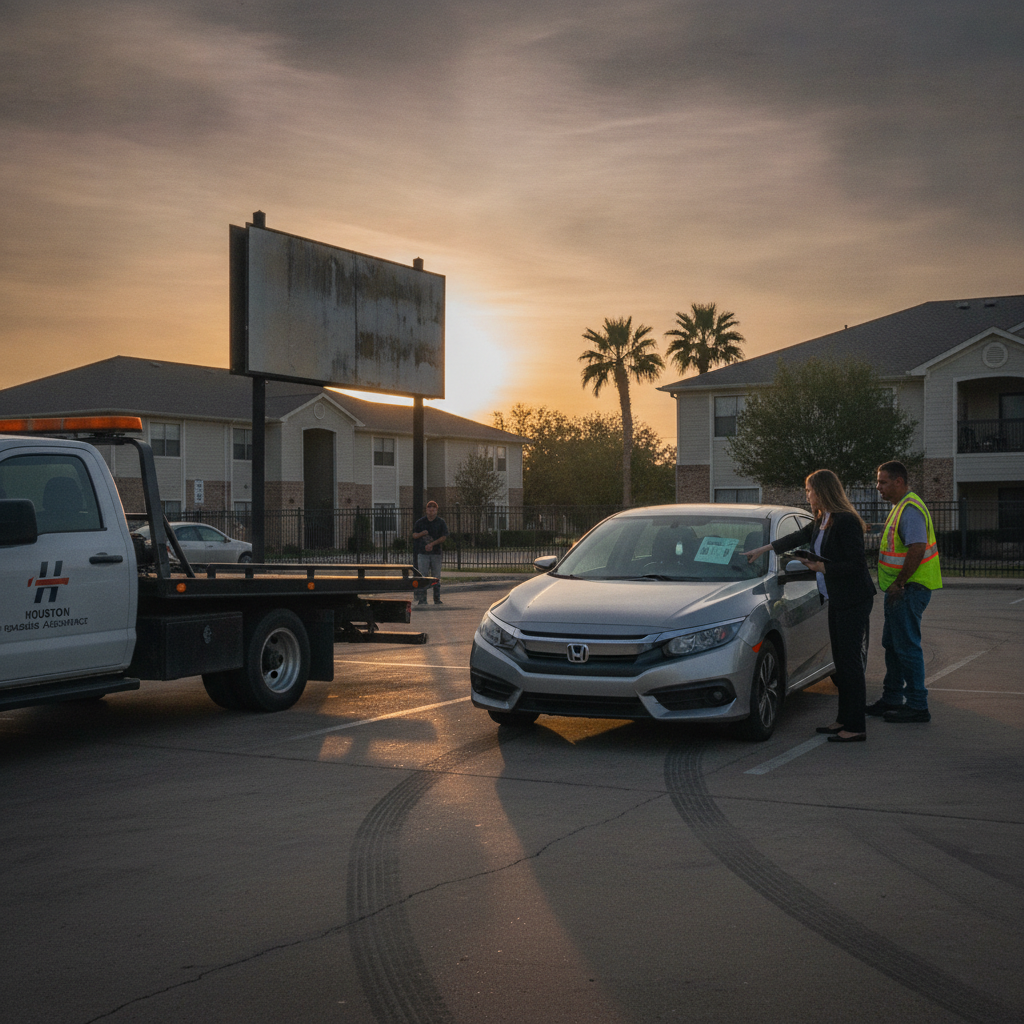
- Pull your tow authorization records immediately. Under Texas Occupations Code §2308.255, a written authorization record should exist for every private property tow. Confirm that the tow was properly documented.
- Contact your towing company directly. Do not make admissions of liability. Simply notify the towing company of the claim and request their incident report and insurance information.
- Review your towing service contract. Locate the indemnification and liability clause. This governs whether the towing company is obligated to defend and hold harmless your property for claims arising from their operations.
- Document the condition of your parking lot. If the damage could be attributable to lot conditions — potholes, tight turns, inadequate lighting — document the current condition of the area where the vehicle was parked.
- Notify your own property liability carrier. Even if you believe the claim runs against the towing company, give your insurer notice so they can monitor the situation.
How Your Towing Contract Should Be Written to Protect Your Property
The towing service agreement is your first and most important line of defense. Many property managers across Spring, Pearland, and the broader Greater Houston metro sign whatever boilerplate contract the towing company presents without reading the liability provisions. That is a mistake that surfaces later, at the worst possible time.
A properly structured private property towing agreement should include, at minimum:
- A clear indemnification clause requiring the towing company to defend, indemnify, and hold harmless the property owner for claims arising from the towing company’s acts or omissions
- Proof of current TDLR licensure and insurance, updated annually
- A requirement that your property be named as an additional insured on the towing company’s liability policy
- A documentation protocol specifying how each tow is recorded, photographed, and reported to the property
- A clear process for handling vehicle owner inquiries and damage disputes
If your current towing company cannot produce a contract with these provisions, or is resistant to adding them, that tells you something important about how they operate — and how a damage claim would likely be handled.
The Audit Trail That Protects You When a Dispute Goes Further
One of the most effective protections a property manager has in any towing-related dispute — including vehicle damage claims — is a complete and verifiable audit trail for every tow that leaves your property. This includes pre-tow photographs of the vehicle and its condition, the written authorization, the hook-up and transport documentation, and the notification records required under Texas parking enforcement rules.
Digital permit and enforcement platforms make this significantly easier to maintain. When every tow is timestamped, photographed, and logged in a system that both the property manager and towing company can access, disputed damage claims become far easier to resolve — because you can demonstrate exactly what condition the vehicle was in before the tow began.
Frequently Asked Questions
Can a vehicle owner sue the property manager if their car is damaged during a private property tow in Houston?
Yes, a vehicle owner can name a property manager in a lawsuit, but whether they have a viable claim against the property depends on the specifics of the towing contract and whether the property manager hired a licensed, insured towing company. If your towing partner is properly credentialed and your agreement includes an indemnification clause, the claim should ultimately run against the towing company — not your property.
Does the towing company’s insurance cover vehicle damage, or does the property owner’s insurance cover it?
In a properly structured arrangement, damage to a vehicle caused by the towing company’s negligence is covered by the towing company’s cargo or garage keepers liability insurance — not the property owner’s policy. This is why requiring proof of insurance before signing a towing agreement is non-negotiable.
What if the towing company claims the vehicle was already damaged before the tow?
This is a common dispute point. Pre-tow photographs taken by the towing operator at the time of hook-up are the definitive record. Any compliant towing company should be photographing vehicles before and after the tow. If your towing partner does not do this as standard practice, that is a gap that puts both parties at risk.
Are there TDLR complaint options if a towing company damages a vehicle and refuses to respond?
Yes. The Texas Department of Licensing and Regulation accepts complaints against licensed towing companies. If a TDLR-licensed towing operator is found to have violated operating standards — including failure to maintain required insurance — they face license suspension or revocation. This is one reason why working with a properly licensed towing company matters beyond just compliance optics.
How do I know if a Houston towing company is actually TDLR-licensed?
You can verify any towing company’s license status through the TDLR license search tool at tdlr.texas.gov. A legitimate towing company will also provide their TDLR license number in any written service agreement. If they cannot, do not sign.
Work With a Towing Partner That Protects Your Property — Before and After the Tow
The right private property towing partner does more than remove unauthorized vehicles. They carry the documentation, the licensing, the insurance, and the contractual structure that protects your property when a dispute arises. For apartment communities, HOA boards, and commercial property managers across Houston, Cypress, Katy, Spring, and the surrounding Harris County area, that protection starts with who you put your name next to on a towing agreement.
MC Towing Inc operates as a fully TDLR-licensed towing company serving the Greater Houston metro, with written service agreements, complete per-tow documentation, and the compliance infrastructure that property managers need to operate without liability exposure. If you want to review your current towing arrangement — or get a free property compliance assessment — contact MC Towing Inc today and let’s talk through what your property actually needs.